
Controls
How to Build and Maintain a Risk Control Matrix
Connect risks and controls with clear ownership, evidence and effectiveness assessment, then keep the matrix current.
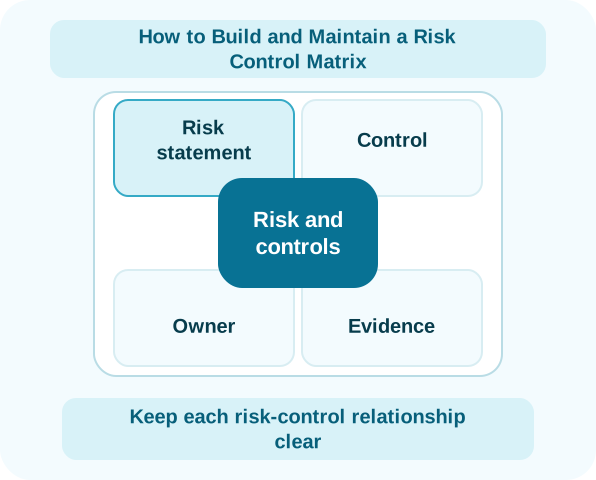
A risk control matrix shows how important controls address defined risks. It can support compliance, audit, process assurance and risk treatment.
Its value depends on the quality of the relationships. A large matrix with duplicate controls and vague descriptions creates maintenance effort without reliable assurance.
Define the scope and risk statements
Begin with the process, service, obligation or risk area in scope. Use complete risk statements so the control relationship can be evaluated.
Avoid listing a control against a broad category such as operational risk without explaining the event or consequence it changes.
Describe controls precisely
A control description should state who performs what, when or how often, using what evidence and for what purpose.
Distinguish controls from policies, aspirations and remediation tasks. A policy may set an expectation, but a control is an action or mechanism intended to influence risk.
Record control ownership and type
Assign an accountable owner. Capture useful attributes such as preventive or detective, manual or automated, frequency and key-control status.
Use only attributes that support assessment or reporting.
Map many-to-many relationships
One control may address several risks or obligations, and one risk may depend on several controls. Reusing a control record reduces duplication and conflicting assessments.
Document how each control affects likelihood, impact or detection rather than assuming the relationship is obvious.
Assess design and operation separately
Design effectiveness asks whether the control, if performed as intended, can address the risk. Operating effectiveness asks whether it is actually performed and working.
Record evidence, assessment date, assessor and limitations. Do not turn a missing evidence file into an automatic conclusion without the agreed method.
Connect issues and remediation
When a control gap is found, create an issue linked to the control and affected risks. Assign remediation, due dates and accountable owners.
Update the risk assessment when the gap materially changes exposure.
Maintain the matrix
Set review triggers for process change, incidents, audit findings, new obligations and ownership changes. Monitor controls with overdue assessments or unresolved issues.
The platform provides reusable control catalogs without template charges and connects controls to risks, assessments, issues and remediation. Explore controls, issues and remediation.
Read one row as an assurance argument
A reviewer should be able to state the risk, explain how the control is expected to change it, identify the evidence examined and distinguish design from operating effectiveness. If any link is missing, the row may be inventory rather than assurance.