
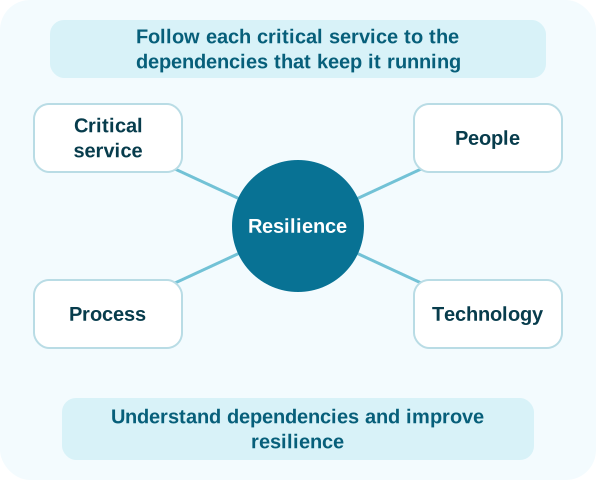
Start with a critical service
Build the view from the service outward
Operational resilience becomes tangible when owners can follow the dependencies that support delivery.
Start with a critical service
Service
Record the important service, accountable owner, impact expectations and relevant objectives.
Start with a critical service
Dependencies
Relate the people, processes, technology, facilities and suppliers required for delivery.
Start with a critical service
Exposure
Connect risks, controls, scenarios, assessments and continuity arrangements to the service.
Start with a critical service
Improvement
Keep gaps, decisions and corrective actions attached to the dependency or service they affect.
A dependency example
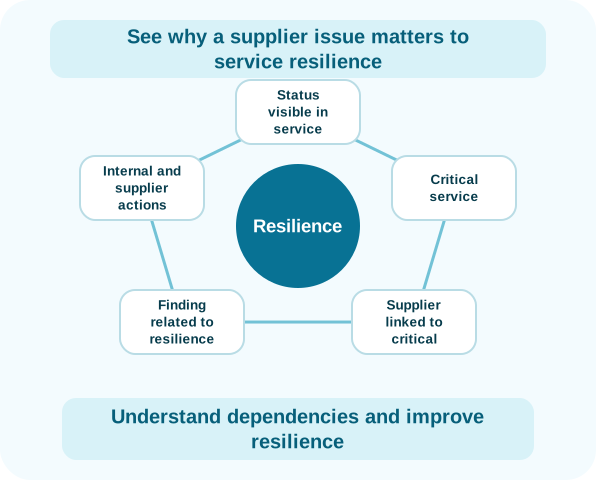
See why a supplier issue matters to service resilience
A supplier assessment may identify a recovery weakness. On its own, that is a third-party finding. When the relationship is connected to a critical service, the resilience team can see the service consequence, existing controls, internal contingency and actions owned by both parties.
This context helps leaders decide whether the remaining exposure is acceptable and which improvement deserves priority.
- Supplier linked to critical service
- Finding related to resilience risk
- Internal and supplier actions
- Status visible in service reporting
Working ownership
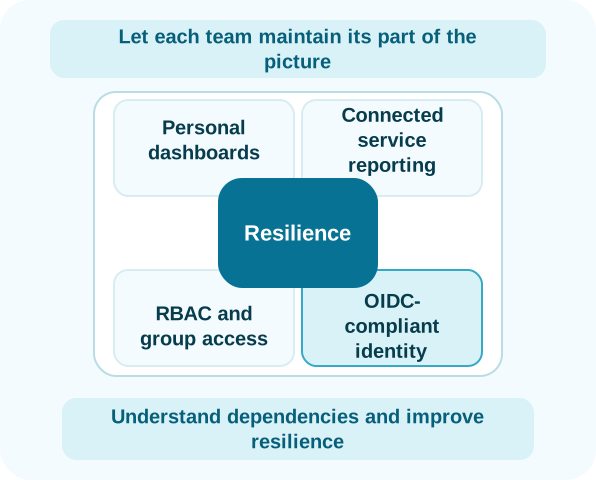
Let each team maintain its part of the picture
Service owners, technology teams, continuity specialists and third-party managers do not need identical dashboards. Each user chooses what to monitor, while shared records provide the relationships required for operational resilience reporting.
Item-level permissions keep sensitive information within the right groups and users.
- Personal dashboards
- Connected service reporting
- RBAC and group access
- OIDC-compliant identity support
Questions answered
Frequently asked questions
Does every dependency have to be migrated at once?
No. Begin with one critical service or resilience problem, agree the required relationships and reporting, and extend the model after it has been validated.
Can continuity and third-party work remain connected to resilience?
Yes. Plans, assessments, suppliers, issues and actions can be related to the services and risks they affect.
Can different teams have different access?
Yes. Each item uses role-based permissions, groups and specific-user rules.