
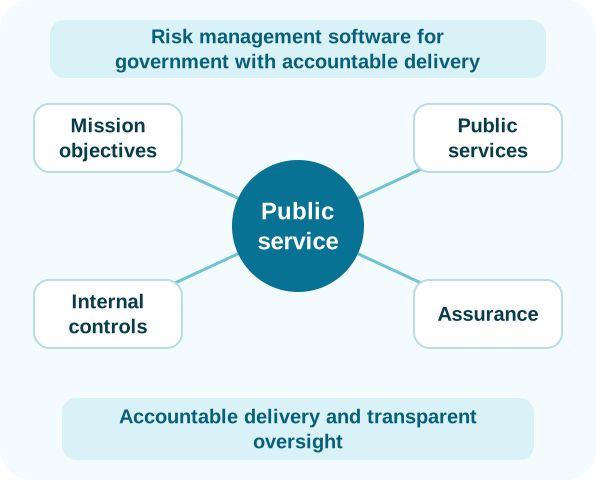
A typical public-service decision
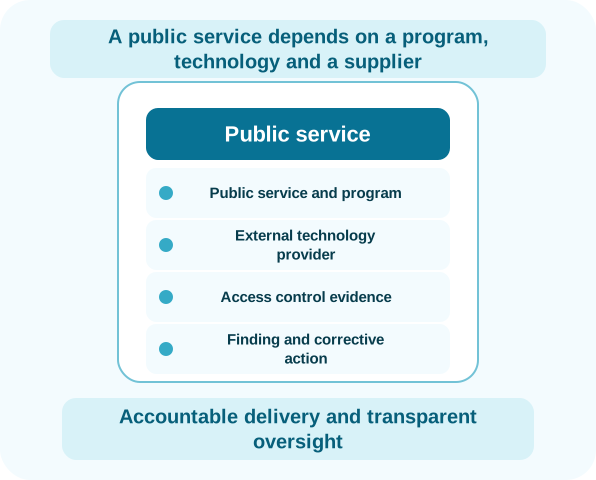
A public service depends on a program, technology and a supplier
A typical public-service decision can begin with a public-facing application delivered through a program and supported by an external technology provider. An assurance review identifies incomplete access evidence, while the service owner is also tracking a delivery risk against the program objective.
The platform keeps the public service, objective, supplier, control, finding and corrective action related. Program staff, technology teams and assurance functions can work within appropriate access boundaries while leadership sees the combined delivery risk.
- Public service and program objective
- External technology provider
- Access control evidence
- Finding and corrective action
Industry context: NIST Cybersecurity Framework 2.0 is designed for industry and government and places governance alongside identification, protection, detection, response and recovery. Review NIST CSF 2.0.
Assurance to correction
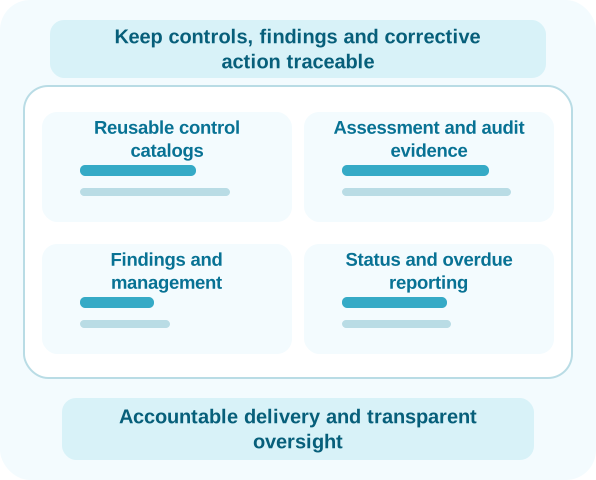
Keep controls, findings and corrective action traceable
Internal control, compliance, audit and assurance activity can generate overlapping evidence and recommendations. Reusing related records reduces duplication and keeps the reason for each action visible.
Link obligations and controls to assessments, findings, issues and remediation. Management reporting can then show unresolved weaknesses, accountable owners and progress without creating a separate action tracker.
- Reusable control catalogs
- Assessment and audit evidence
- Findings and management actions
- Status and overdue reporting
Controlled participation
Support accountability across government teams
Make it easier for owners to maintain information at source while oversight functions retain a coherent view.
Controlled participation
Secure contribution
Use RBAC, groups and specific users to control access to each item while allowing the right people to participate.
Controlled participation
Consistent reporting
Apply common definitions and scoring across registers, then preserve program context for interpretation.
Controlled participation
Phased adoption
Begin with one enterprise or IT risk register, prove the operating model and extend it without purchasing another module.