
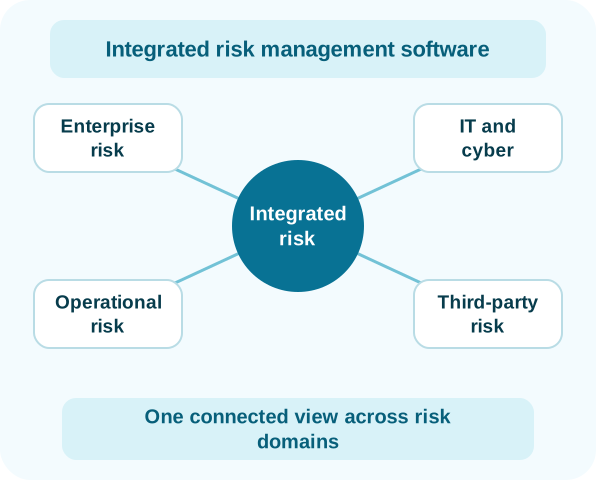
Why IRM
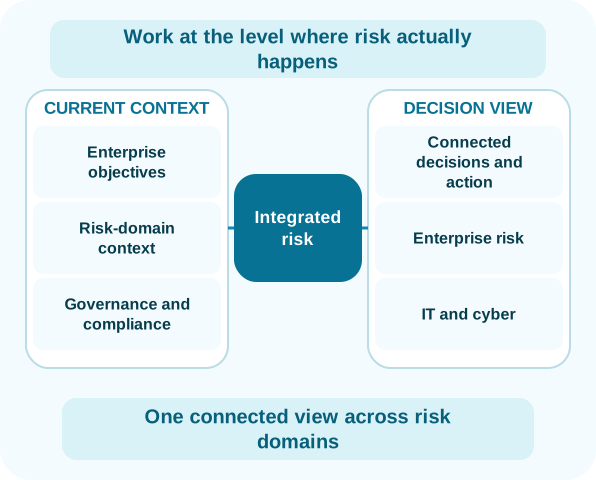
Work at the level where risk actually happens
GRC often frames risk through governance and compliance responsibilities. ERM connects risk with enterprise objectives. IRM brings those views together around the risk domains where people assess exposure, operate controls, make decisions and complete treatment.
The platform gives those activities a shared model. An enterprise view can coexist with the technology, cyber, operational, compliance, audit, third-party and resilience context needed to manage the work.
- Enterprise objectives and appetite
- Risk-domain context
- Governance and compliance evidence
- Connected decisions and action
One example
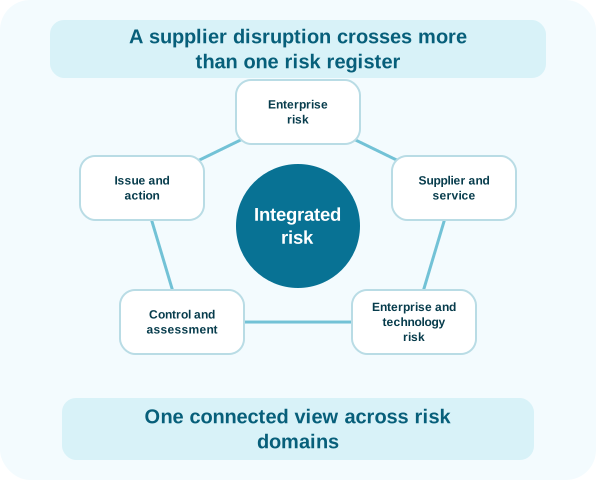
A supplier disruption crosses more than one risk register
A critical supplier supports a customer-facing service. The supplier assessment identifies a recovery weakness, technology teams understand the service dependency, compliance has an obligation to consider, and enterprise risk needs the potential business impact.
In separate tools, each team records only its part and someone later tries to reconcile the story. In Parapet, the supplier, service, risks, controls, assessment, issue and remediation can remain related while each team retains its own responsibilities and access.
- Supplier and service relationship
- Enterprise and technology risk rationale
- Control and assessment evidence
- Issue and action
What leaders and owners see
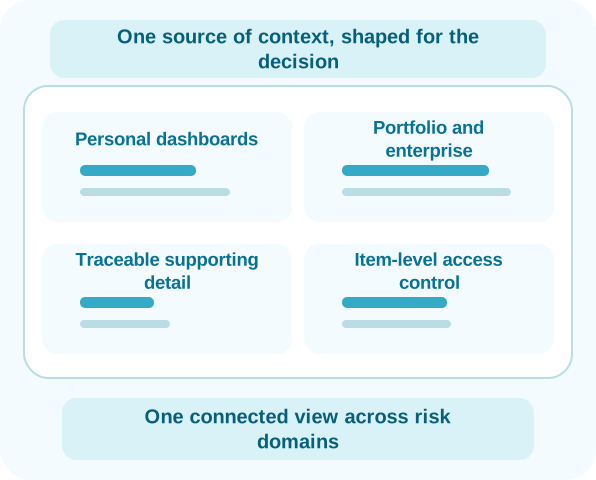
One source of context, shaped for the decision
The supplier owner can focus on the assessment and remediation. A service owner can see the operational consequence. The CRO or CISO can review material exposure and overdue action across the portfolio.
Personal dashboards let each user monitor the information they choose. Reports use the same connected data for portfolio, enterprise, committee and board oversight.
- Personal dashboards
- Portfolio and enterprise reporting
- Traceable supporting detail
- Item-level access control
Adopt progressively
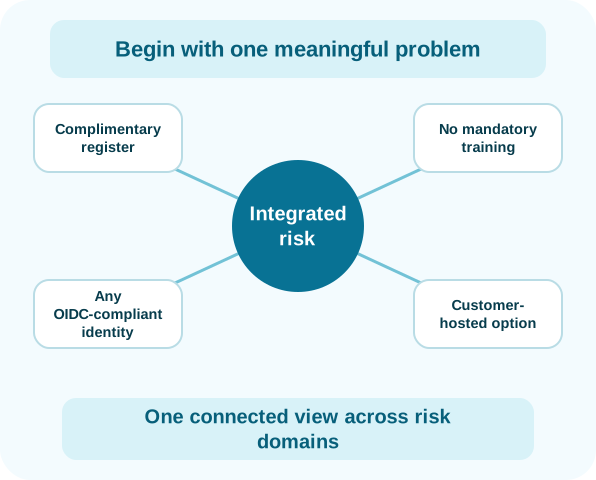
Begin with one meaningful problem
You do not need to replace every process at once. Start with a siloed enterprise, IT or cyber risk register, prove the common model, then add adjacent domains.
All platform capabilities are available from day one, so expansion does not require another module purchase. Per-active-item pricing lets cost follow actual use.
- Complimentary register migration for qualifying SaaS implementations
- No mandatory training for business users
- Any OIDC-compliant identity provider supported
- Customer-hosted option with custom pricing
Questions answered
Frequently asked questions
How is IRM different from GRC?
GRC is a broad governance, risk and compliance discipline. IRM emphasizes connected risk decisions across business, technology, cyber, compliance and operations. The practical evaluation should focus on how well a platform joins these activities around shared risk rationale.
Does Parapet require separate modules?
No. All Parapet capabilities are available from day one. Pricing is based on active items rather than modules or users.
Is Parapet an integrated risk management system or platform?
Both descriptions apply. Parapet is an integrated risk management system delivered as a connected platform for risk, controls, assessments, issues, action and reporting.
Can we keep different access rules for different registers?
Yes. Security is applied to each object using role-based permissions, groups and specific users.