
Third-party risk
Connecting Third-Party Risk to Enterprise Risk
Move beyond isolated supplier scores by linking third-party information to business dependencies and enterprise exposure.
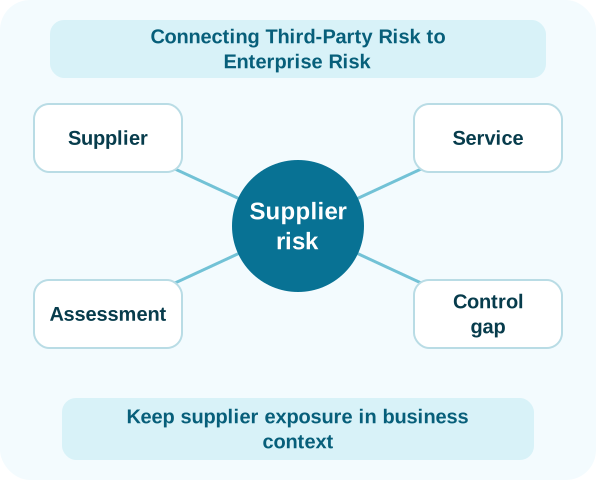
Third-party risk management often becomes a questionnaire process. Suppliers are scored, findings are recorded, and remediation is tracked, but the result remains separate from enterprise risk decisions.
Connection starts by identifying which services, processes, data, technology and obligations depend on each third party.
Follow one supplier issue
A supplier supporting a customer-facing service reports that recovery testing is incomplete. The questionnaire finding alone says little about the decision the organization needs to make.
Add the relationship detail: which service depends on the supplier, whether an alternative exists, which recovery control is weak, what business consequence is plausible, and who owns the interim response. The finding can now influence enterprise and operational risk instead of remaining a red supplier score.
| Record | Context to retain |
|---|---|
| Supplier relationship | Service provided, internal owner, criticality and substitution options |
| Assessment finding | Evidence, affected requirement and uncertainty |
| Business risk | Plausible disruption and consequence for the service or objective |
| Remediation | Supplier action, internal action, due dates and interim treatment |
Map the business dependency
Record the product or service provided, internal owner, critical services supported, data involved, geographic or concentration factors and substitution options.
The same supplier can create different risk for different business uses, so retain relationship detail rather than relying only on a vendor-wide rating.
Connect assessments to risk scenarios
Translate important findings into plausible events and business consequences. A security weakness matters differently depending on access, data, service criticality and existing controls.
Link the assessment evidence to the relevant risk rather than copying the score into another register.
Reuse controls and obligations
Map shared requirements to reusable control or obligation catalogs. This makes it easier to compare suppliers and reduce duplicate assessment questions.
Keep client controls and supplier controls distinct when accountability differs.
Relate issues to enterprise exposure
A third-party issue should show which services and risks it affects, the interim response, accountable owner and expected resolution.
If several important services depend on the same supplier or fourth party, concentration should be visible in enterprise reporting.
Coordinate remediation
Some actions belong to the supplier, others to internal owners. Track both with clear dates and decision points.
When remediation is delayed, review whether exposure remains within appetite and whether additional treatment is needed.
Report dependency, not only supplier status
Leadership reporting should explain material dependencies, exposure, control confidence, concentration and overdue treatment. A red supplier rating alone does not state what decision is required.
Explore Parapet third-party risk management and enterprise risk management for a connected view.
Ask the substitution question
For each important supplier relationship, record what would happen if the service were unavailable and how quickly a credible alternative could take over. This prevents a vendor-wide score from hiding the different consequences created by separate business uses.