
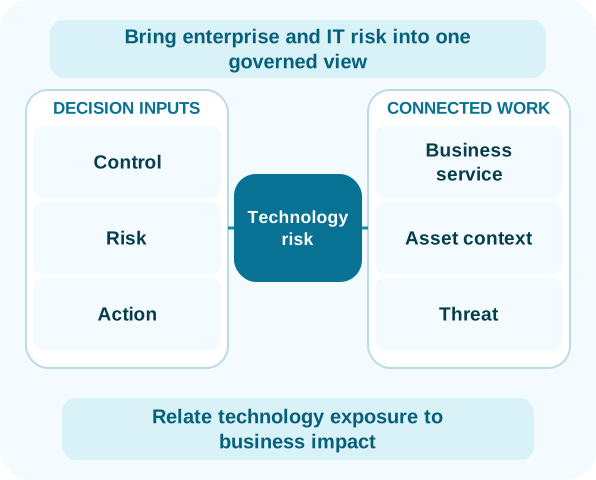
- Starting point
- Enterprise and IT risk registers in separate structures
- Design decision
- Common structure with item-level role-based access
- Migration
- Prepare, map and validate active records
- Resulting model
- Personal dashboards and consolidated management reporting
The operating problem
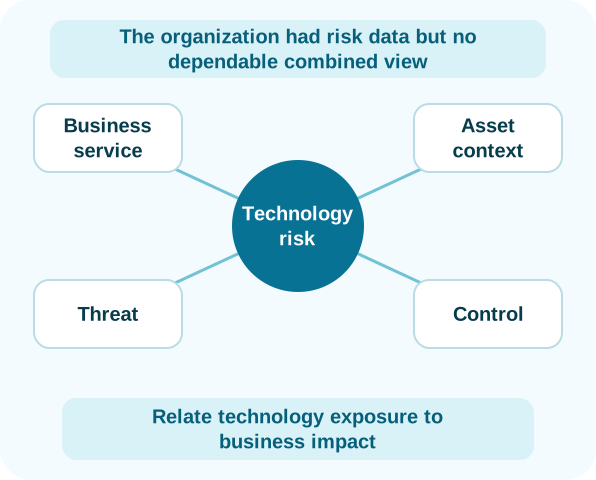
The organization had risk data but no dependable combined view
Business and technology teams maintained useful registers for their own responsibilities. Leadership could not combine them reliably because categories, scoring, ownership fields and review cycles did not align.
The implementation did not begin by reproducing every spreadsheet. It began by separating the information required for enterprise oversight from the detail each domain still needed for everyday ownership.
The migration sequence
Create the common layer, then prove it with active records
- Inventory.Review the fields, categories, scores, owners and review dates in each source register.
- Agree.Define the minimum taxonomy and scoring required for dependable enterprise reporting.
- Map and prepare.Clean active data, map source values and identify records that should not be carried forward.
- Validate.Check permissions, ownership, reporting and reconciliation before broader use.
How the work changed
One reporting structure without taking ownership away from teams
Risk owners continued to maintain the records relevant to their work. Common data supported management and enterprise reporting, while item-level permissions preserved appropriate access. Controls, issues, assessments and remediation could then be connected as the program expanded.