
- Sector
- US energy and utilities
- Environment
- Cloud services, business platforms and hosted systems
- Participants
- Cybersecurity engineers, business teams and senior stakeholders
- Parapet role
- Risk mitigation, regulatory compliance, decisions and action in one working structure
Where Parapet had to fit
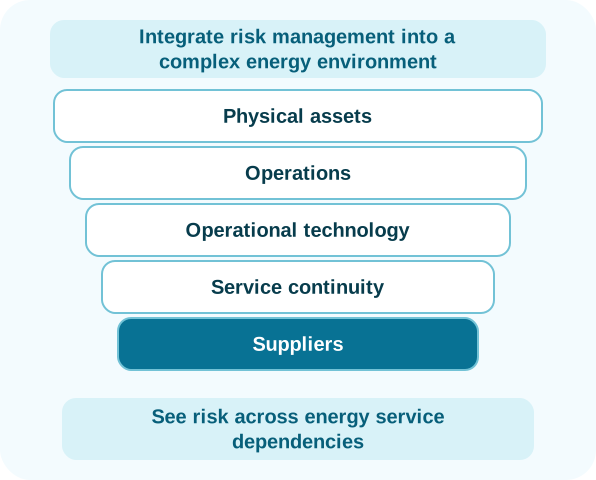
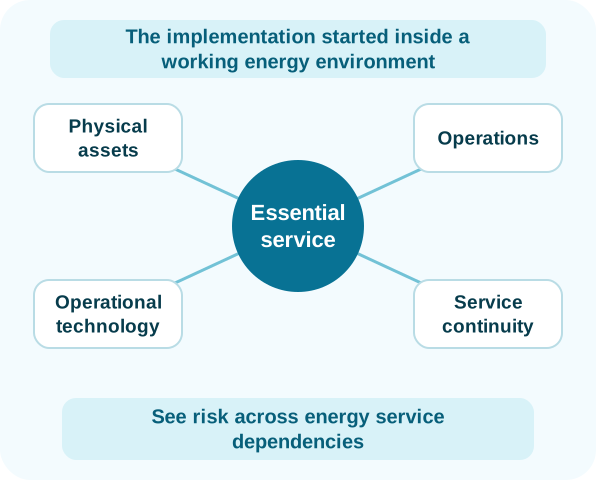
The implementation started inside a working energy environment
The organization already operated AWS services, Salesforce business systems and IBM-hosted systems. The implementation brought cybersecurity engineers, business teams and senior stakeholders into the same design discussion. Existing architecture, business services and operational responsibilities shaped the work from the beginning.
Parapet was introduced as the risk-management layer within that environment, not as a standalone register that ignored the systems and decision routes already in use.
Implementation sequence
Connect the governance work before expanding the model
- Understand the environment.Identify the business systems, cloud services, security responsibilities and governance participants that shape risk decisions.
- Agree the risk structure.Define how risks, controls, compliance requirements, decisions and actions should relate.
- Fit the platform.Configure Parapet within the agreed security and operating boundaries rather than replacing every source system.
- Keep action visible.Retain mitigation, monitoring and response responsibilities alongside the risk and decision they address.
What this deployment demonstrates
A risk platform can fit the wider architecture
The deployment brought risk, compliance and action into a shared structure while respecting an existing technology environment. It also reinforced a Parapet design principle: integration scope and operating responsibilities should be agreed before implementation, not discovered after launch.