
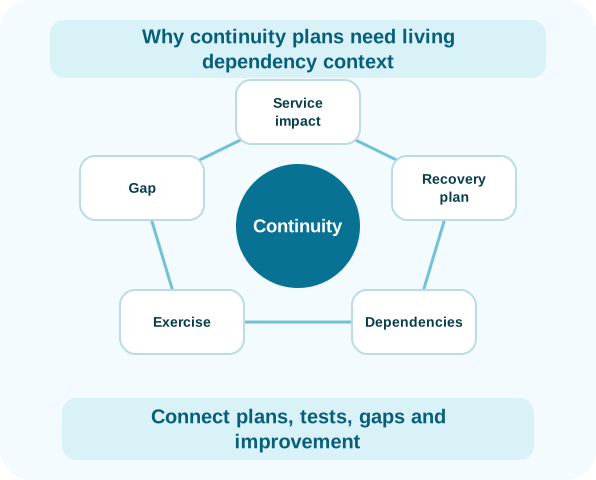
About this account: Continuity and recovery experience influenced Parapet's product design. It is not presented as a Parapet customer deployment.
The practical problem
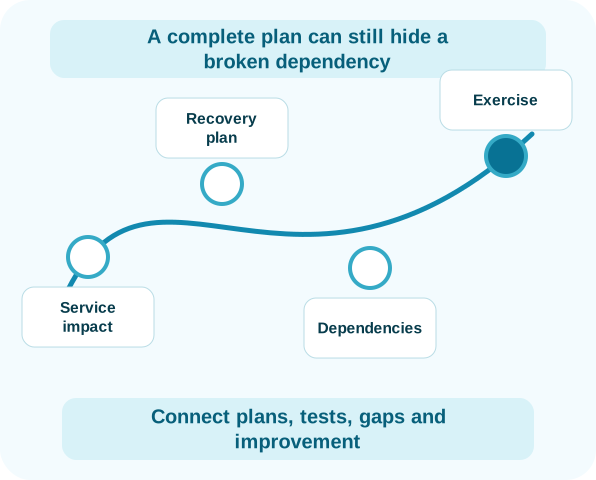
A complete plan can still hide a broken dependency
Continuity and disaster recovery work covered financial services, telecommunications, payments, energy and insurance. The useful work went beyond document production. It included business impact context, solution design, implementation coordination, exercises, testing and follow-up with recovery owners.
Exercises repeatedly showed why a plan must remain connected to the people, processes, technology and third parties that make recovery possible.
The product decision
Treat an exercise result as the start of improvement
- Trace the service.Keep impact and recovery expectations beside the dependencies that support delivery.
- Record what was tested.Preserve the scenario, assumptions, participants and evidence.
- Expose the gap.Relate the finding to the plan, dependency and risk it affects.
- Follow through.Keep the owner, action and verification visible until the agreed outcome is reached.