
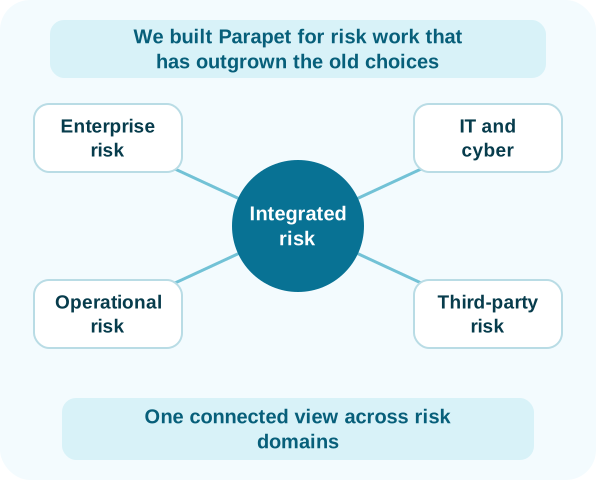
Why we built Parapet
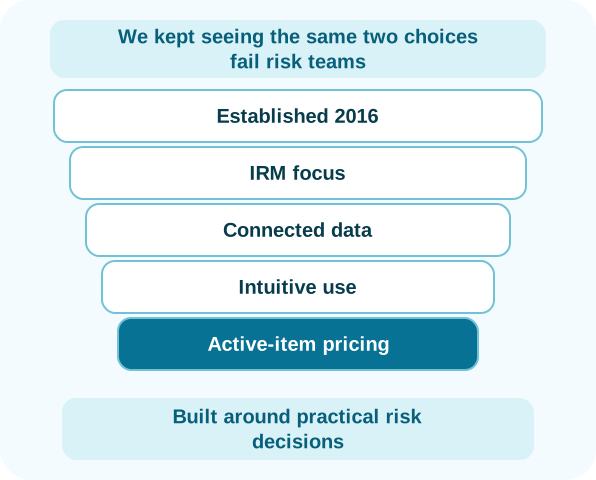
We kept seeing the same two choices fail risk teams
Organizations could buy a broad GRC platform with costly user and module structures, or keep reconciling spreadsheets and disconnected tools before every important meeting. Neither choice made everyday risk ownership easier.
We established Parapet in 2016 to offer a focused integrated risk management alternative. Business owners should be able to contribute without becoming software specialists, and risk leaders should be able to reach the current record behind a report.
Choices we made deliberately
Product decisions that follow the way risk work grows
These are operating-model choices, not optional packages.
- Begin with a real problem
- Move one register or workflow first, prove the ownership and reporting model, and expand from evidence.
- Include every capability
- Risk, control, issue, audit, remediation and reporting capabilities are available from day one.
- Price active work
- SaaS cost follows active items rather than users or modules. Templates and inactive history are not charged.
- Secure every item
- Roles, groups and specific users determine who can work with each record.
Experience behind the product
Practical work shaped how Parapet behaves
These practitioner accounts are separate from Parapet deployment case studies. They explain the work that influenced product decisions.
Assurance
Security assurance and remediation
Why findings need to remain connected to evidence, decisions and owned action.
Read the practitioner accountContinuity
Business continuity and disaster recovery
Why plans, dependencies, exercises and improvement work need one operating context.
Read the practitioner accountArchitecture
Architecture-led product evaluation
Why representative journeys and integration boundaries matter before a roadmap is approved.
Read the practitioner account